

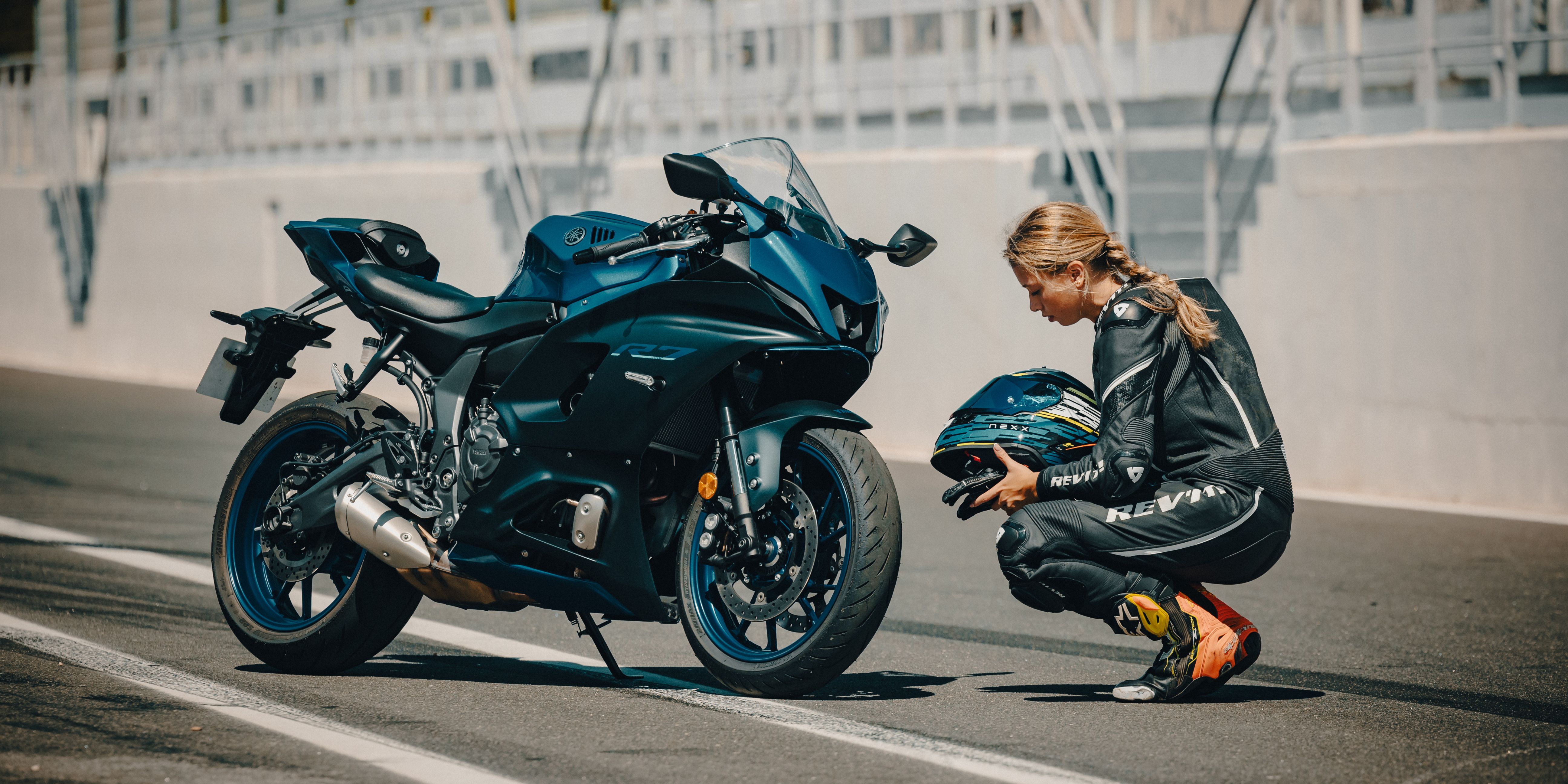
In this article, we revisit some often-overlooked truths about helmet safety—things every rider should know, but many tend to ignore when choosing a helmet.
Riding in Malaysia: Unique, Demanding, and Often Underestimated by Malaysians
Riding in Malaysia is unlike anywhere else in Asia—but many Malaysian riders may not realize just how unique the conditions are.
Malaysia is one of the few Asian countries where motorcycles are legally allowed on highways. Riders often travel at sustained speeds over 140 km/h, and long-distance rides of 500 km or more in a single day are surprisingly common.
Add to that the number of European vehicles—especially German cars—on Malaysian roads, and it becomes clear: the road infrastructure, speed range, and driving culture here more closely resemble Europe than neighboring Asian countries.
Most other countries in the region ban motorcycles from expressways altogether, making Malaysia an outlier in both distance and speed.
This unique environment demands better protective gear—and a higher level of rider awareness, similar to that of European motorcyclists.
Think Twice Before Reaching for a Malaysian Classic Choice
In Malaysia, many riders settle for open-face helmets, often chosen for comfort rather than protection—even though they use them for long-range touring at highway speeds.
Before you simply buy an open-face helmet for your big bike, remember this: your helmet is your final line of defence in a crash.
Choosing the right helmet isn’t just about fit or style. It’s about selecting the right type of helmet for how you ride—and understanding what truly makes a helmet protective.
Let's think again about why we wear helmets.
Most facial injuries in motorcycle accidents involve the jaw and lower face—areas that jet helmets leave completely exposed.
Modern full-face and modular helmets are equipped with advanced ventilation systems that make them surprisingly comfortable, even in Malaysian heat.
They also reduce wind fatigue and protect you from dust, debris, and rain—all of which contribute to greater long-distance comfort than you’d expect from an open-face helmet.
Safety should never be optional, and comfort no longer has to be sacrificed.
D-Ring: Still the King?
D-rings are considered the gold standard of helmet retention systems—which is why they’re mandatory in world-class racing.
But for road use, a safety-certified micrometric buckle is more than sufficient. These buckles are tested under strict standards and have never failed when properly fastened.
However, still, many riders insist on D-rings.
Some people say "It must be D-rings"... but in fact, sadly, not all of them tighten the chin strap firmly.
Before putting blind faith in the buckle type, consider this: in many real-world accidents, helmets come off not because of the buckle, but because the chin strap wasn’t tightened properly.
Rather than arguing over the buckle system, the best advice is this:
Always tighten your chin strap firmly. That alone can save your life.
How Helmet Shell Materials Make a Difference
Most helmets are made using one of three shell materials:
Thermoplastic
Fiberglass or Composite Fiber (sometimes with carbon weave)
Pre-preg Carbon Fiber (Dry Carbon)
Some so-called “carbon” helmets use only a decorative carbon layer over a standard composite shell. The weight savings are minimal, and the price is usually much higher—without real performance gain.
In contrast, pre-preg carbon fiber helmets (also known as dry carbon) offer:
Higher fiber content
Greater strength
Lower weight
Uniform shell structure (No weak point)
NEXX’s X-PRO Carbon series uses aerospace-grade pre-preg carbon, manufactured using the same autoclave process used in Formula 1 and aerospace.
The result is a helmet that is:
Lighter
Stronger
More structurally consistent
These helmets meet high-speed impact standards while staying light, balanced, and ideal for both daily use and long-distance touring.
THINK TWICE, CHOOSE IT RIGHT
In a crash, there are no second chances.
Whether you ride a scooter or a superbike, the risk of serious injury is real—and urban streets can be more dangerous than racetracks.
Don’t compromise on the one piece of gear that protects your head.
Wear what actually protects you—not just what feels convenient.